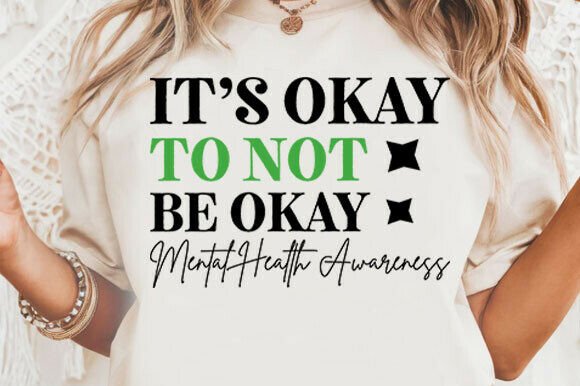
Mental Health Awareness SVG: Graphics for T-Shirt Designs & Local Branding
As a brand designer who’s developed visual identities for over 30 local businesses—from artisanal candle studios and neighborhood coffee roasters to organic skincare boutiques and seasonal flower shops—I recently evaluated the Mental Health Awareness SVG for potential use in a real-world project: a small-batch herbal tea brand launching a “Calm Collective” wellness line. My goal wasn’t just aesthetic fit—it was functional alignment with packaging, customer touchpoints, and authentic brand storytelling.
First Impression: Warm, Human, and Thoughtfully Composed
The Mental Health Awareness SVG lands with quiet intention—not clinical, not overly decorative, but gently expressive. It leans into soft curves, balanced negative space, and a subtle botanical or abstract heart motif (depending on variant), suggesting empathy without sentimentality. This isn’t bold protest art or minimalist corporate iconography. It reads as friendly, handmade, and emotionally grounded—ideal for brands rooted in care: wellness studios, holistic apothecaries, mindful children’s product lines, or even a compassionate florist offering “self-care bouquets.” It avoids looking mass-produced, which matters deeply for small business branding where authenticity drives trust.
Where It Earns Its Place in Real Local Business Design
This graphic design asset shines where emotional resonance meets practical application. In our tea brand project, we used the Mental Health Awareness SVG across six high-impact areas:
- Product labels: Centered on matte kraft tea tins, it served as a gentle visual anchor—small enough to respect ingredient hierarchy, large enough to signal values at a glance.
- Packaging accents: Printed in soft sage ink on recycled hang tags and inner sleeve liners, it reinforced brand identity without overwhelming texture or typography.
- Social media graphics: Paired with short, empathetic copy (“Breathe. Steep. Belong.”), the SVG became a recurring visual motif across Instagram carousels and Facebook event banners—consistent, recognizable, and shareable.
- Thank-you cards & printable inserts: The included high-res PNG rendered crisply on letterpress-style thank-you notes tucked inside orders—adding warmth and reinforcing mission.
- Seasonal campaign visuals: For Mental Health Awareness Month, we scaled the SVG into a hero banner for the website homepage and adapted it into a limited-edition sticker sheet for local pop-up events.
- Product mockups: Used in Canva and Adobe Express to generate clean, on-brand e-commerce visuals—no stock-image fatigue, just cohesive, ownable marketing visuals.
Why It Strengthens Small Business Presentation
When thoughtfully integrated, the Mental Health Awareness SVG delivers measurable brand value: it creates a stronger first impression on crowded shelves; improves product recognition through consistent symbolic language; supports clearer visual hierarchy by acting as a meaningful focal point; and builds customer trust by visually affirming shared values. For handmade businesses and local retailers, that translates directly into shelf appeal, repeat purchase behavior, and social shares that feel earned—not engineered.
Best Fit: Contexts That Let It Breathe
This SVG works hardest where emotion and intention are central. Prioritize it for:
- Decorative brand elements on eco-friendly packaging
- Hero graphics for wellness-focused landing pages or email headers
- Stickers, tote bags, and reusable shopping bags for boutique stores
- Printable social media campaign graphics and digital ads
- Seasonal packaging accents—think lavender sachets, self-care kits, or mindfulness journals
- Thank-you cards, gift enclosure notes, and branded tissue paper motifs
Use With Intention: Where Caution Applies
Not every context benefits from this kind of expressive graphic design asset. Avoid placing it:
- In formal corporate branding systems where neutrality or authority is required
- On very small product labels (<5mm height) where detail loss undermines clarity
- Over busy backgrounds or low-contrast surfaces—test print output rigorously
- Alongside dense legal text, ingredient lists, or regulatory disclaimers
- In luxury minimalist contexts where restraint is the core aesthetic (e.g., high-end skincare with monochrome serif typography)
- Where it competes visually with primary logo lockups or essential product information
Practical Brand Designer Notes You’ll Want to Apply
Before locking in the Mental Health Awareness SVG for client work or your own small business branding, run these checks:
- Test it on real packaging mockups—especially with your actual substrate (kraft paper, matte laminate, cotton tag)
- Preview in black-and-white: does it retain legibility and emotional tone?
- Check PNG transparency—no stray pixels or halos around edges
- Open the SVG in Illustrator or Figma: confirm paths are clean, grouped logically, and editable
- Preview beside your brand fonts—does it harmonize with serif, sans serif, script, and handwritten styles?
- Verify commercial license terms—this is a digital product, and usage rights matter for physical product sales and client deliverables
- Compare against competitor packaging: does it differentiate, not echo?
- Assess print quality at intended size—vector scalability is key, but raster fallbacks must be sharp
For local business owners, creative entrepreneurs, and packaging designers building real brands—not just aesthetics—the Mental Health Awareness SVG is more than clipart. It’s a thoughtful, ready-to-integrate piece of visual language that supports purpose-driven storytelling. When matched with intention, craft, and brand consistency, it becomes part of what makes customers pause, connect, and choose you—not just the product, but the meaning behind it.