250 Years Freedom Eagle SVG
A Designer’s First Look: Bold, Patriotic — and Built for Stitching?
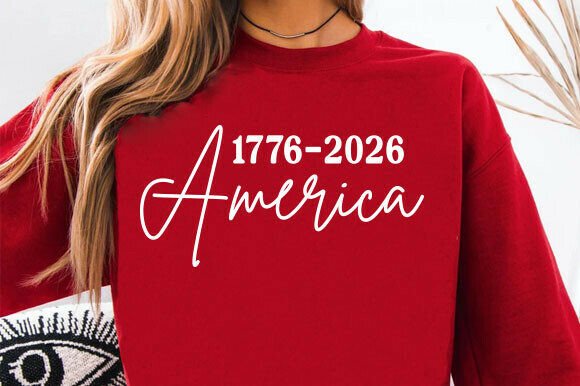
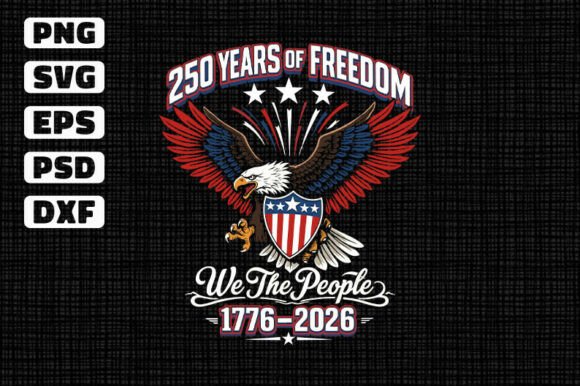
When I opened the 250 Years Freedom Eagle SVG file for the first time, my eye went straight to the eagle — centered, wings slightly spread, head turned with quiet authority. The “We The People” banner loops beneath it, and “1776–2026” anchors the timeline cleanly. It’s not overly ornate, but it’s not minimal either. There’s weight here — visual and thematic. As a designer who’s stitched hundreds of patriotic motifs for boutique apparel and custom gifts, I immediately pictured this on a heavyweight cotton tote bag for a local history museum’s 250th-anniversary fundraiser. Not as a quick Cricut iron-on, but as a thoughtfully embroidered statement piece.
Where This Design Truly Shines (and Where It Needs Care)
The 250 Years Freedom Eagle SVG works best when treated like a signature motif — not filler, not background. I tested it as a sweatshirt embroidery design on midweight French terry: clean lines held up, the eagle’s feathers read clearly in satin stitch, and the banner text stayed legible at 3.5 inches wide. On baby onesies? I scaled it down to 2.25 inches and swapped dense fill for a lighter fill stitch + running stitch outline — it kept its dignity without puckering delicate fabric. As an embroidered patch for scout troop vests or veteran appreciation events, it gained instant recognition and gravitas.
But here’s what I noticed: the “1776–2026” numerals are tight. At under 1.75 inches wide, the inner curves of the “6” and “9” risk stitching into one another on low-density stabilizer. And the banner’s subtle curve? Lovely in vector form — but on curved surfaces like caps or rolled tea towels, it needs careful digitizing adjustment before embroidering. If you’re using this as a machine embroidery design straight from the SVG without re-digitizing, test it first on a scrap cap panel with tear-away + cutaway stabilizer combo.
Fabric & Function: What Holds Up — and What Doesn’t
- Works well on: Medium-to-heavyweight woven cotton (tote bags, aprons, pillow covers), stable knits (crewneck sweatshirts), and twill (patches, caps with proper hooping).
- Use caution with: Lightweight jersey (baby bodysuits need reduced density), dark fabrics (white thread highlights fine details but shows lint easily — pre-wash and lint-roll), and textured weaves like waffle-knit kitchen towels (stitch definition blurs without extra underlay).
- Avoid on: Highly stretchy performance fabrics without heavy stabilization, ultra-thin silk-blends (lettering loses contrast), or layered garments like quilted jackets where stitch height interferes with drape.
Real-World Impact: More Than Just a Graphic
This isn’t just another T-Shirt Designs graphic — it carries narrative weight. When I stitched it onto a navy canvas apron for a small shop owner launching a “Founding Threads” collection, customers paused. They asked about the date range. They touched the eagle’s wing. That’s handmade product resonance: clarity + meaning = trust. For Etsy sellers, that translates to better listings — fewer “Is this clear when stitched?” questions, more “Can I get it in red thread?” follow-ups. As a digital embroidery file, it performs strongest when paired with thoughtful presentation: a clean printable mockup showing it on both light and dark fabric, plus a note about recommended hoop size and stabilizer type.
It also quietly elevates perceived value. A $28 embroidered tea towel with this motif sells faster than one with generic stars — because it feels intentional, commemorative, and rooted. That matters for holiday embroidery (July 4th bundles), wedding gifts (“We The People” as a nod to shared values), and even nursery decor where parents want timeless symbolism over cutesy trends.
Practical Notes Every Embroidery Designer Should Check
- Run a test stitch on scrap fabric — especially if using it for custom apparel or commercial embroidery. Watch how the banner curves behave on your machine.
- Compare thread colors in natural light: navy + gold reads richly, but charcoal + cream adds quiet sophistication for modern boutiques.
- Review stitch density. If your version includes dense fill areas in the eagle’s body, reduce by 10–15% for baby embroidery or lightweight totes.
- Confirm hoop size compatibility. Most versions fit comfortably in a 4×4 hoop at standard scale — but verify before batching 50+ sweatshirt orders.
- Inspect tiny lettering in black-and-white mockups. Does “We The People” stay crisp at 2.5 inches? If not, consider simplifying or using it larger.
- Check licensing terms carefully. Since this is marketed as a Graphics file for Cricut sublimation *and* embroidery use, confirm whether resale of finished embroidered items is permitted — especially important for craft fair vendors and small shop owners.
Final Thought: Purpose Over Polish
The 250 Years Freedom Eagle SVG doesn’t try to be everything. It’s not whimsical. It’s not minimalist. It’s not abstract. It’s grounded, declarative, and respectfully detailed — exactly what you want when stitching something meant to last beyond a season. Whether you’re an Etsy seller building a Fourth of July collection, a church group making veteran tribute patches, or a maker designing personalized gifts for a historic town’s anniversary, this design earns its place not through flash, but through fidelity — to craft, to context, and to the quiet confidence of well-executed embroidery.